
With diving more into AI in technology, why are PRDs important?
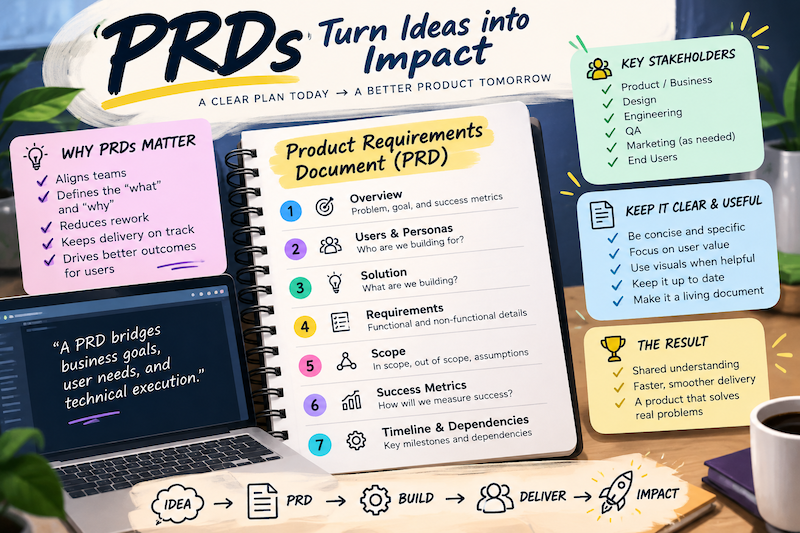
Building a successful product takes more than writing code and creating a great design. Before development begins, teams need to understand what they are building, why they are building it, and what the final product should accomplish. This is where a Product Requirements Document (PRD) becomes important. A PRD provides a clear roadmap for a product and helps keep everyone—from product managers and designers to developers and stakeholders—working toward the same goal.
A PRD explains the purpose of a product or feature and outlines its requirements. It can include information such as the problem being solved, target users, product goals, functionality, user stories, requirements, and success criteria. While the level of detail can vary depending on the project, the main purpose is to create a shared understanding of what needs to be built.
One of the biggest benefits of a PRD is alignment. Software projects often involve people with different responsibilities and perspectives. Developers may focus on technical requirements, designers may focus on the user experience, and business stakeholders may focus on organizational goals. Without a clear source of information, these different perspectives can lead to misunderstandings. A PRD gives everyone a common reference point.
PRDs are also important because they help teams define the problem before jumping into a solution. It is easy for teams to become focused on building a particular feature without fully understanding why it is needed. A good PRD starts by identifying the user or business problem and then connects the proposed solution back to that problem. This helps ensure that development work provides real value rather than simply adding another feature to a product.
Another benefit is that PRDs can make the development process more efficient. When requirements are unclear, developers may have to spend additional time asking questions, revisiting decisions, or reworking completed features. A well-written PRD does not eliminate every question, but it provides enough context to reduce unnecessary confusion and rework. This is especially valuable for Agile teams, where requirements can evolve throughout development.
PRDs can also help teams determine what success looks like. Including measurable goals or acceptance criteria gives the team a way to evaluate whether the product or feature accomplished its intended purpose. Instead of simply saying that a feature should “work well,” the team can define specific outcomes that can be tested and measured.
However, a PRD should not be treated as a document that can never change. Product development is often an iterative process, and new information can emerge after development begins. Customer feedback, technical limitations, changing business priorities, or testing may require requirements to be updated. A PRD should provide direction while still allowing the team to adapt.
Ultimately, the journey from PRD to product is about turning an idea into something useful. The PRD provides the foundation, but collaboration, design, development, testing, and feedback bring the idea to life. When done well, a PRD helps teams understand not only what they are building, but also why they are building it. That shared understanding can lead to better products, fewer misunderstandings, and a more focused development process.
A great product does not start with code. It starts with a clear understanding of the problem, the users, and the goals—and a PRD can help turn that understanding into a plan.